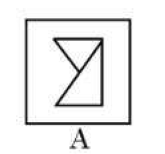
In the following question, figure A is embedded in one of the four answer figures. Select the correct alternative.
Explanation:
To solve this embedded figure problem, we need to carefully examine Figure A and then visually search for its exact shape and orientation (or a rotated/reflected version if allowed, but typically it's exact) within the given options. **Step 1: Analyze Figure A.** * Figure A consists of three line segments: a horizontal line segment, followed by a diagonal line segment going downwards and to the right, and then another horizontal line segment parallel to the first, connected at the bottom-right end of the diagonal. It resembles a stylized 'N' or a lightning bolt shape. **Step 2: Examine each option for the embedded Figure A.** * **Option 1:** Upon careful inspection, Figure A cannot be found in this option. The diagonal lines and horizontal segments do not combine to form the exact shape of Figure A. * **Option 2:** This figure is a simple grid of squares. Figure A, which contains diagonal lines, cannot be embedded in this grid. So, this is incorrect. * **Option 3:** This figure contains a complex pattern with multiple horizontal, vertical, and diagonal lines. If you look at the central-right portion of this figure, you can clearly trace Figure A. Specifically, locate a horizontal line segment. From its right endpoint, trace a diagonal line segment downwards and to the right. From the bottom endpoint of this diagonal, trace another horizontal line segment to the right, parallel to the first. This exact sequence of segments forms Figure A. So, this is the correct answer. * **Option 4:** This figure has a different pattern of lines and does not contain Figure A. The angles and connections of the lines do not match Figure A. So, this is incorrect. \nTherefore, Figure A is embedded in Option 3. * **Option 1:** Figure A is not present in this option. So, this is incorrect. * **Option 2:** Figure A is not present in this option. So, this is incorrect. * **Option 3:** Figure A is clearly embedded in this option. So, this is the correct answer. * **Option 4:** Figure A is not present in this option. So, this is incorrect.